Showing posts with label probe. Show all posts
Showing posts with label probe. Show all posts
Friday, 28 October 2011

Tuesday, 2 August 2011
SEC Probing Stanford Receiver for Keeping $118 Million
By: Mary Thompson and Scott Cohn - CNBC
Investor complaints about the long delays and puny payouts from the receiver in charge of rounding up assets from Allen Stanford's alleged $7 billion ponzi scheme have prompted an SEC investigation of the receiver.
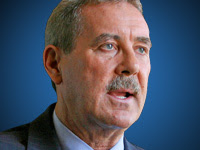
SEC Inspector General David Kotz confirms he is looking into whether the SEC's actions regarding oversight of the receiver has been on the up and up. In a motion filed Monday, attorneys said that of the $119.7 million recovered by the receiver, $118.2 million has gone to expenses and fees, leaving just $1.5 million for investors.
The receiver, Dallas attorney Ralph Janvey, was appointed by a federal judge at the SEC's request, after the agency sued Stanford in 2009. But more than two years later, Janvey has recovered just pennies on the dollar for Stanford investors.
"We did receive a complaint recently about Stanford receivership-related issue," Kotz told CNBC. "We have looked at it and plan to open up an inquiry or investigation with respect to allegations regarding improper conduct of SEC employees."
It is the latest in a series of Stanford-related investigations by Kotz, who earlier found SEC staffers were aware of problems at Stanford as far back as 1997.
The new investigation is apparently the result of a request by a Massachusetts law firm, Kachroo Legal Services, that has been attempting to intervene in the Stanford litigation on behalf of a handful of Stanford investors claiming "malfeasance and waste" in the receivership.
The complaint also alleges an improper relationship between Janvey and the official court-appointed Stanford investors committee, which consists of four attorneys and two individual investors. Rather than looking out for all 28,000 investors, the complaint alleges, the committee is simply generating more fees for the attorneys.
"And the potential compensation to these attorneys is enormous," the complaint says.
Janvey's attorney, Kevin Sadler, tells CNBC in a statement that Janvey has not yet heard from Kotz, "but will respond promptly and appropriately to any such request or inquiry, just as the receiver has responded to numerous requests from other government agencies" since being appointed in February of 2009.
"The allegation of an 'inside deal' between the receiver and the investors committee is patently false and completely irresponsible," the statement adds.
"Through dozens of motions, reports and fee applications filed with the court, as well as hearings held in open court, all of the receiver's activities have been transparent and open to scrutiny by the Court and other interested parties."
But attorney Gaytri Kachroo, who filed the new motion and requested the Inspector General's investigation, notes that the last time the SEC objected to a bill from Janvey was more than a year ago.
Stanford, 61, has denied wrongdoing and claims Janvey and the SEC have been dismantling a legitimate business. He is scheduled to go on trial in January on 14 criminal counts.
Investor complaints about the long delays and puny payouts from the receiver in charge of rounding up assets from Allen Stanford's alleged $7 billion ponzi scheme have prompted an SEC investigation of the receiver.

SEC Inspector General David Kotz confirms he is looking into whether the SEC's actions regarding oversight of the receiver has been on the up and up. In a motion filed Monday, attorneys said that of the $119.7 million recovered by the receiver, $118.2 million has gone to expenses and fees, leaving just $1.5 million for investors.
The receiver, Dallas attorney Ralph Janvey, was appointed by a federal judge at the SEC's request, after the agency sued Stanford in 2009. But more than two years later, Janvey has recovered just pennies on the dollar for Stanford investors.
"We did receive a complaint recently about Stanford receivership-related issue," Kotz told CNBC. "We have looked at it and plan to open up an inquiry or investigation with respect to allegations regarding improper conduct of SEC employees."
It is the latest in a series of Stanford-related investigations by Kotz, who earlier found SEC staffers were aware of problems at Stanford as far back as 1997.
The new investigation is apparently the result of a request by a Massachusetts law firm, Kachroo Legal Services, that has been attempting to intervene in the Stanford litigation on behalf of a handful of Stanford investors claiming "malfeasance and waste" in the receivership.
The complaint also alleges an improper relationship between Janvey and the official court-appointed Stanford investors committee, which consists of four attorneys and two individual investors. Rather than looking out for all 28,000 investors, the complaint alleges, the committee is simply generating more fees for the attorneys.
"And the potential compensation to these attorneys is enormous," the complaint says.
Janvey's attorney, Kevin Sadler, tells CNBC in a statement that Janvey has not yet heard from Kotz, "but will respond promptly and appropriately to any such request or inquiry, just as the receiver has responded to numerous requests from other government agencies" since being appointed in February of 2009.
"The allegation of an 'inside deal' between the receiver and the investors committee is patently false and completely irresponsible," the statement adds.
"Through dozens of motions, reports and fee applications filed with the court, as well as hearings held in open court, all of the receiver's activities have been transparent and open to scrutiny by the Court and other interested parties."
But attorney Gaytri Kachroo, who filed the new motion and requested the Inspector General's investigation, notes that the last time the SEC objected to a bill from Janvey was more than a year ago.
Stanford, 61, has denied wrongdoing and claims Janvey and the SEC have been dismantling a legitimate business. He is scheduled to go on trial in January on 14 criminal counts.
Sunday, 24 July 2011
SEC Watchdog Probes Agency’s Oversight of Stanford Receiver
By Joshua Gallu - Bllomberg
The U.S. Securities and Exchange Commission’s internal watchdog is investigating the agency’s dealings with the man hired to recover funds for victims of R. Allen Stanford’s alleged fraud amid claims the court-appointed receiver has taken too much money for himself.
Inspector General H. David Kotz said today he is reviewing the SEC’s oversight of the receiver, Ralph Janvey, after getting a complaint that the bulk of recovered funds has been used to cover legal bills.
Janvey was appointed in 2009 after the SEC sued Stanford and a federal grand jury indicted him on 21 criminal counts alleging that he used his Houston-based Stanford Financial Group and an Antigua-based banking unit to defraud clients through the sale of certificates of deposit. Stanford, who has denied the allegations, is being held without bail while awaiting trial.
Kachroo Legal Services P.C. of Cambridge, Massachusetts, released a statement yesterday accusing Janvey of “malfeasance and waste” in his management of collected assets and claiming there was an “inside deal” between Janvey and the Stanford investor committee to approve high fees.
Kevin Sadler, Janvey’s attorney, said that the allegations are “patently false and completely irresponsible.” Janvey, who hasn’t been contacted by Kotz, will respond “promptly and appropriately” to any request, Sadler said in a statement.
SEC spokesman Kevin Callahan declined to comment.
Stanford investors and lawmakers have pressed the SEC for more than two years demanding more help in recouping money lost in the alleged fraud. Last month, the SEC said some investors should be eligible for payouts from the Securities Investor Protection Corp., an industry-backed fund that protects customers when a brokerage fails.
The U.S. Securities and Exchange Commission’s internal watchdog is investigating the agency’s dealings with the man hired to recover funds for victims of R. Allen Stanford’s alleged fraud amid claims the court-appointed receiver has taken too much money for himself.
Inspector General H. David Kotz said today he is reviewing the SEC’s oversight of the receiver, Ralph Janvey, after getting a complaint that the bulk of recovered funds has been used to cover legal bills.
Janvey was appointed in 2009 after the SEC sued Stanford and a federal grand jury indicted him on 21 criminal counts alleging that he used his Houston-based Stanford Financial Group and an Antigua-based banking unit to defraud clients through the sale of certificates of deposit. Stanford, who has denied the allegations, is being held without bail while awaiting trial.
Kachroo Legal Services P.C. of Cambridge, Massachusetts, released a statement yesterday accusing Janvey of “malfeasance and waste” in his management of collected assets and claiming there was an “inside deal” between Janvey and the Stanford investor committee to approve high fees.
Kevin Sadler, Janvey’s attorney, said that the allegations are “patently false and completely irresponsible.” Janvey, who hasn’t been contacted by Kotz, will respond “promptly and appropriately” to any request, Sadler said in a statement.
SEC spokesman Kevin Callahan declined to comment.
Stanford investors and lawmakers have pressed the SEC for more than two years demanding more help in recouping money lost in the alleged fraud. Last month, the SEC said some investors should be eligible for payouts from the Securities Investor Protection Corp., an industry-backed fund that protects customers when a brokerage fails.
Tuesday, 14 December 2010
US Widens Stanford Probe to brokers
US securities regulators have broadened their investigation into the alleged $8bn Ponzi scheme run by Allen Stanford, the Texan billionaire, to include brokerage executives who invested their clients’ money in Stanford International Bank products.
The Securities and Exchange Commission has notified Danny Bogar, former president of Stanford International Bank’s brokerage operations, and several brokers in recent months that it intends to file civil fraud charges against them in connection with the probe, according to lawyers involved in the case and a regulatory filing. The SEC declined to comment.
The move marks an expansion of the government’s probe beyond the top officers of the bank to include the army of brokers who attracted millions of dollars from investors....
Tom Taylor, a lawyer for Mr Bogar, confirmed that his client had received a Wells notice, the process the SEC uses to notify individuals that they may face civil charges. Mr Taylor said his client had no knowledge of the alleged fraud.
Mr Taylor added that he had met SEC investigators to plead his client’s case. “He certainly wasn’t privy to what was going on [at the bank],” Mr Taylor said. Mr Bogar is a brother-in-law of Mr Davis.
Patrick Cruickshank, a broker who worked in Stanford’s Austin, Texas, office from 2006 until 2009, also received a Wells notice, according to an update to his record filed with the Financial Industry Regulatory Authority the brokerage industry’s regulator. The SEC said it planned to sue him on civil charges of securities fraud and aiding the Stanford fraud, according to the filing.
A lawyer for Mr Cruickshank said his client “has done nothing wrong” and “was a victim of the Stanford fraud”.
He would say that wouldn’t he!
The Securities and Exchange Commission has notified Danny Bogar, former president of Stanford International Bank’s brokerage operations, and several brokers in recent months that it intends to file civil fraud charges against them in connection with the probe, according to lawyers involved in the case and a regulatory filing. The SEC declined to comment.
The move marks an expansion of the government’s probe beyond the top officers of the bank to include the army of brokers who attracted millions of dollars from investors....
Tom Taylor, a lawyer for Mr Bogar, confirmed that his client had received a Wells notice, the process the SEC uses to notify individuals that they may face civil charges. Mr Taylor said his client had no knowledge of the alleged fraud.
Mr Taylor added that he had met SEC investigators to plead his client’s case. “He certainly wasn’t privy to what was going on [at the bank],” Mr Taylor said. Mr Bogar is a brother-in-law of Mr Davis.
Patrick Cruickshank, a broker who worked in Stanford’s Austin, Texas, office from 2006 until 2009, also received a Wells notice, according to an update to his record filed with the Financial Industry Regulatory Authority the brokerage industry’s regulator. The SEC said it planned to sue him on civil charges of securities fraud and aiding the Stanford fraud, according to the filing.
A lawyer for Mr Cruickshank said his client “has done nothing wrong” and “was a victim of the Stanford fraud”.
He would say that wouldn’t he!
Sunday, 25 April 2010
SEC Enforcement Lawyer Who Quashed Stanford Probes Later Did Legal Work For Stanford

The new inspector general report on the SEC's handling of the Allen Stanford alleged Ponzi scheme case paints a devastating picture of the agency's repeated failures to pursue the billionaire banker, despite a widespread belief within the SEC's Fort Worth office that he was a fraud.
At the center of the story is Spencer Barasch, the chief of enforcement at the SEC's Fort Worth office, who declined to pursue Stanford multiple times, only to later jump ship to become a partner at a big private law firm where he proceeded to represent none other than 'Sir' Allen Stanford.
The inspector general has referred Barasch to the bars of Washington and Texas, where he is licensed, for potential violation of conflict of interest rules.
Stanford is now in jail facing charges over an alleged $7 billion Ponzi scheme.
In March 2005, Barasch announced he was leaving the SEC after 17 years, with seven of those as the head of the Fort Worth enforcement division, for the international law firm Andrews Kurth. He joined the firm's securities enforcement team.
"I am excited to become a part of this premier law firm, and look forward to using my regulatory background and experience to provide an expanded level of service to the firm's clients," Barasch said in a Andrews Kurth press release.
A couple months later, Stanford Financial Group executives were looking for representation to help them handle a burgeoning SEC inquiry into the company. They got wind of Barasch's new gig and word made its way up to Stanford himself, who said in an email to an underling, "This guy looks good and probably knows everyone at the Fort Worth office. Good job."
A few days later, Barasch emailed an SEC ethics counsel to get the green light to work for Stanford. "I am not aware of any conflicts and I do not remember any matters pending on Stanford while I was at the [C]ommission," he wrote.
In fact, the IG found, Barasch was involved in deciding at least four times to close investigations of Stanford Financial or to not pursue findings by SEC investigators that the firm was a fraud.
The first of those came in August 1998 when Barasch, recently promoted to head of enforcement at the Fort Worth office, made the decision to kill a three-month old inquiry into Stanford's business.
Even though his staff had not "determined there was no fraud," Barasch said the matter was closed due to "some problems with the case," according to another SEC staffer's account quoted in the IG report. Those problems included the enforcement staff's belief that Stanford, though himself based in the U.S., did not have U.S. investors, along with the institutional "preference for 'quick hit' cases," according to the report.
But there was dissent in the SEC ranks over Barasch's decision.
In an interview with the IG, an SEC staffer who had reviewed Stanford's financial statements described her reaction as "shock and disbelief and this incredible feeling of failure and great disappointment".
In early 2001, Barasch received a complaint which began: "I am currently providing [redacted] services to an Antigua company and have become very concerned about the unusual activities of the Stanford Financial Group, a Texas based organisation, operating though subsidiaries on the Island." But nothing was ever done in response to the complaint, the IG found.
In 2002, the Fort Worth office's examination staff again looked at Stanford Financial and grew suspicious that "the international bank was a Ponzi scheme," one staffer told the IG. They discussed the matter with the enforcement staff and forwarded a report on Stanford to Barasch. But Barasch told the IG that he couldn't recall seeing it, and the IG found "no indication" that he ever read the report.
At a March 2005 conference in which an attorney with the Forth Worth office's examination division gave a talk on the Stanford case, Barasch looked "annoyed" and "summarily told [her] ... it was not something they were interested in" immediately after the presentation, according to IG interviews with SEC staffers. He told the IG he couldn't remember the presentation or the conversation.
The examination staff then deliberately waited until Barasch left the SEC in April 2005 -- to become a partner at Andrews Kurth on the firm's securities enforcement team -- to refer the matter yet again to the office's enforcement division, according to the IG.
The SEC ethics counsel denied Barasch's request to work for Stanford, made soon after he left the SEC. (In an email to an underling, Stanford reacted angrily: "This is bs and I want to know why the SEC would /could conflict him out.")
But Barasch was undeterred. "Approximately one year after the SEC's Ethics Office determined that Barasch's conflicts ... prevented him from representing Stanford in connection with the SEC investigation, Stanford retained Barasch to do just that," the IG report says.
He belatedly sought -- and was denied -- permission to represent Stanford Financial Group, but only after billing for 12 hours of work.
The IG has referred the matter to the bars in Washington, D.C., and Texas, where Barasch holds membership, as potentially violating professional ethics.
Barasch did not immediately respond to a request for comment. But in a statement provided by his firm, Andrews Kurth Managing Partner Bob Jewell said Barasch "served the SEC with honor, integrity and distinction" and did not violate conflicts of interest.
When the SEC finally sued Stanford for fraud in February 2009, Barasch was on the scene again, eager to represent Stanford, only to be denied permission. He described his thinking in an interview with IG investigators:
"In 2009 the whole thing blows up. Every lawyer in Texas and beyond is going to get rich over this case. Okay? And I hated being on the sidelines. And I was contacted right and left by people [to] represent them."
Wednesday, 14 April 2010
SEC watchdog to fault Stanford probe: sources
A federal watchdog is expected to soon release a report criticizing how the U.S. Securities and Exchange Commission handled a probe of alleged swindler Allen Stanford, people familiar with the matter said on Tuesday.
The report by SEC Inspector General David Kotz is expected to be highly critical of the agency, unlike a narrowly focused report he released last July.
It comes as the agency has been trying to rebuild its reputation after missing Bernard Madoff's fraud.
Stanford is in a Texas jail awaiting trial on 21 criminal charges related to an alleged $7 billion scheme involving the issuance by his Antiguan bank of certificates of deposit (CDs) with improbably high interest rates.
Authorities accuse Stanford of running a Ponzi scheme, in which early investors are paid with the money from new clients.
Some of his former investors are blaming the SEC and the Financial Industry Regulatory Authority, a broker-dealer regulator, for not stopping the Texas financier sooner.
In his July report, Kotz concluded that the SEC did nothing wrong when it "stood down" on investigating Stanford at the request of federal prosecutors.
But the new report, which looks further back at the agency's dealings with Stanford, suggests the SEC dragged its feet in getting its own probe under way, the sources familiar with the report said.
The sources requested anonymity because Kotz's latest report is not yet public.
A spokesman for the SEC had no comment. Kotz's report is being reviewed by the agency's Freedom of Information Act office.
In February 2009, the SEC filed civil charges accusing Stanford and three of his companies with fraudulently selling billions of dollars of the fraudulent CDs.
The SEC's charges were announced two months after Madoff was arrested for orchestrating a massive Ponzi scheme, which investigators have estimated at up to $65 billion.
The SEC has said it began investigating Stanford in 2005, and had been aware of complaints about his CDs even earlier.
But it has said it faced jurisdictional hurdles in pursuing an investigation against an offshore bank, in part because of a U.S. Supreme court ruling that limited its ability to regulate traditional bank products such as CDs.
In September, Kotz issued a report in which he found the SEC had bungled five probes that should have uncovered Madoff's fraud. Madoff pleaded guilty and is serving a 150-year sentence in a North Carolina federal prison.
The report by SEC Inspector General David Kotz is expected to be highly critical of the agency, unlike a narrowly focused report he released last July.
It comes as the agency has been trying to rebuild its reputation after missing Bernard Madoff's fraud.
Stanford is in a Texas jail awaiting trial on 21 criminal charges related to an alleged $7 billion scheme involving the issuance by his Antiguan bank of certificates of deposit (CDs) with improbably high interest rates.
Authorities accuse Stanford of running a Ponzi scheme, in which early investors are paid with the money from new clients.
Some of his former investors are blaming the SEC and the Financial Industry Regulatory Authority, a broker-dealer regulator, for not stopping the Texas financier sooner.
In his July report, Kotz concluded that the SEC did nothing wrong when it "stood down" on investigating Stanford at the request of federal prosecutors.
But the new report, which looks further back at the agency's dealings with Stanford, suggests the SEC dragged its feet in getting its own probe under way, the sources familiar with the report said.
The sources requested anonymity because Kotz's latest report is not yet public.
A spokesman for the SEC had no comment. Kotz's report is being reviewed by the agency's Freedom of Information Act office.
In February 2009, the SEC filed civil charges accusing Stanford and three of his companies with fraudulently selling billions of dollars of the fraudulent CDs.
The SEC's charges were announced two months after Madoff was arrested for orchestrating a massive Ponzi scheme, which investigators have estimated at up to $65 billion.
The SEC has said it began investigating Stanford in 2005, and had been aware of complaints about his CDs even earlier.
But it has said it faced jurisdictional hurdles in pursuing an investigation against an offshore bank, in part because of a U.S. Supreme court ruling that limited its ability to regulate traditional bank products such as CDs.
In September, Kotz issued a report in which he found the SEC had bungled five probes that should have uncovered Madoff's fraud. Madoff pleaded guilty and is serving a 150-year sentence in a North Carolina federal prison.
Sunday, 3 January 2010
Feds probe links between lawmakers, Allen Stanford
MIAMI — Just hours after federal agents charged banker Allen Stanford with fleecing investors of $7 billion, the disgraced financier received a message from one of Congress' most powerful members, Pete Sessions.
“I love you and believe in you,” said the e-mail sent on Feb. 17. “If you want my ear/voice — e-mail,” it said, signed “Pete.”
The message from the chair of the National Republican Congressional Committee represents one of the many ties between members of Congress and the indicted banker that have caught the attention of federal agents.
The Justice Department is investigating millions of dollars Allen Stanford and his staff contributed to lawmakers over the past decade to determine if the banker received special favors from politicians while building his spectacular offshore bank in Antigua, McClatchy Newspapers has learned.
Agents are examining campaign dollars, as well as lavish Caribbean trips funded by Stanford for politicians and their spouses, feting them with lobster dinners and caviar.
The money Stanford gave Sessions and other lawmakers was stolen from his clients while he carried out what prosecutors now say was one of the nation's largest Ponzi schemes.
Sessions, 54, a longtime House member from Dallas who met with Stanford during two trips to the Caribbean, did not respond to interview requests.
Supporters say the lawmaker, who received $44,375 from Stanford and his staff, was not assigned to any of the committees with oversight over Stanford's bank and brokerages.
His press secretary, Emily Davis, said she was unable to comment on the e-mail sent at 11:31 a.m. on the day Stanford was charged by the U.S. Securities and Exchange Commission. “I haven't seen it, so I can't verify its authenticity at this time,” she said.
Found on the servers
But the message found on Stanford's computer servers and the contributions he made to Sessions and other lawmakers — totaling $2.3 million — are now part of the government's inquiry.
Records show Stanford also doled out $5 million on lobbying since 2001, setting up his own Washington firm last year with expensive furnishings and artwork — the money plundered from his customers' accounts.
Over the years, he took on battles to protect his banking network while fending off regulators.
In 2001, he pressed successfully to kill a bill that would have exposed the flow of millions into his secretive offshore bank in Antigua.
The next year, he helped block legislation that would have drawn more government scrutiny to his bank.
While he was fighting reforms to financial secrecy and offshore banking laws, Stanford was hobnobbing with dozens of lawmakers.
Stanford hosted a wedding dinner for New York's U.S. Rep. John Sweeney at his five-star restaurant in Antigua in 2004 — toasting the couple for photographers—and staged a cocktail fundraiser for now-disgraced Ohio congressman Bob Ney at his bayfront Miami office.
“He legitimized himself by having himself vetted by powerful members of Congress,” said Steven Riger, a former vice president at Stanford's Miami brokerage. “It was all about the public's perception.”
Kent Schaffer, Stanford's court-appointed attorney, said his client never asked for special favors. “Stanford gave contributions to politicians, but there was nothing criminal behind it,” he said.
The federal investigation comes after months of criticism from victims' groups complaining that elected leaders failed to vet Stanford before accepting money from him the past 10 years. If they had, they would have discovered that the U.S. State Department in 1999 concluded that Stanford helped create a haven for money-laundering in Antigua.
Most members of Congress contacted by McClatchy Newspapers declined to discuss their ties to the banker, other than to say they have since returned the contributions.
Stanford's foray into the Washington power game began in 2001, shortly after he was allowed to open a controversial trust office in Miami.
The special office was a boon to Stanford's bank, generating millions in the sale of certificates of deposit — the money stuffed in pouches and sent on jets to his banking headquarters in Antigua.
But when a bill was created to compel offshore bankers to reveal the sources of money flowing into their banks, Stanford jumped into the fight to kill it.
The measure would have forced Stanford — who was moving millions illegally through his Miami trust office — to open his books to federal regulators.
“He wanted the complete freedom to move money offshore without any threat,” said Jack Blum, a lawyer who testified before Congress supporting the legislation. “He was cheerleading for the offshore tax havens.”
To combat the bill, Stanford launched a strategy he would use for the next eight years: He gave money to the party in power, including $40,000 to the Senate Republican Campaign Committee and $100,000 to the inaugural committee of George W. Bush, records show.
By summer of 2001, the bill was dead.
In the ensuing years, Stanford's banking empire flourished, with the Miami office generating hundreds of millions of dollars, records show.
In late 2001, Stanford confronted another threat: A bill allowing state and federal regulators to share details about fraud cases — which would have brought Stanford's brokerages under closer scrutiny — landed in the Senate Banking Committee.
Though the Senate was now controlled by Democrats, Stanford was prepared: He had given $500,000 to the Democratic Senatorial Campaign Committee in 2002 — his largest-ever contribution.
“I told him that the Democrats were going to take over, and he needed to make friends with them,” recalled his lobbyist Ben Barnes, once Texas' lieutenant governor.
Stanford also doled out $100,000 to a national lobbying group to fight the measure.
The bill, which sparked sweeping opposition from brokerages and insurers, never made it to a vote.
While he was scoring points in Washington, Stanford was squaring off for a crisis at his banking headquarters in Antigua.
In 2003, investors began questioning the legitimacy of his certificates of deposit, which generated higher returns than major U.S. banks, and articles began appearing in news magazines about money-laundering in Antigua.
In addition, Stanford was drawing the scrutiny of the SEC, which was demanding to know where his bank was investing customers' money.
A contact in Antigua
In the ensuing years, Stanford would play a dual role of staving off regulators — paying $200,000 in bribes to Antiguan banking chief Leroy King — while forging ties with members of Congress, court records show.
Those connections deepened when Stanford started hosting a series of congressional visits to Antigua.
It began in 2003, when lawmakers including Sessions, Ney, John Sweeney, Gregory Meeks, Donald Payne, Max Sandlin and Phil Crane arrived in Antigua on a mission to “promote relations” with the Caribbean nation.
The cost of the January trip — including nights in luxury hotels and two Stanford jets for travel — came to $39,500, records show.
For four days, they gathered for talks on business in the Caribbean, trading jokes with Prime Minister Lester Bird and touring the island.
In time, the group of lawmakers, which became known as the “Caribbean Caucus,” would take 11 more trips — the costs picked up by the Inter-American Economic Council, a nonprofit funded by Stanford.
A total of $311,307 was spent on the trips to places like Montego Bay, St. Croix and Key Biscayne. “We were rolling out food, caviar, wine, lobster,” recalled Stanford's personal chef, Jonas Hagg.
During a 2004 Antiguan trip, Sweeney and his 34-year-old girlfriend were married, with Stanford hosting the ceremony and reception for the New York Republican at the famed Pavilion Restaurant.
“If it wasn't for Allen, I certainly would not be here today,” Sweeney told Stanford's newspaper, The Antigua Sun. “He has done a tremendous job of promoting and raising the awareness of Antigua in the United States, and people take notice of a man of his standing and stature in the halls of Washington.”
Photos of Stanford and caucus members were splashed in company publications and news releases. “You looked and you saw all these important people,” Riger said. “That legitimacy allowed him to go out and collect a lot of money.”
Stanford was not only funding the trips — the money looted from his customers — but also staging fundraisers.
He held an event at his office on the 21st floor of the Miami Center for Ohio house member Ney, who was later sentenced to 30 months in prison after admitting to accepting gifts and money from clients of lobbyist Jack Abramoff.
He rallied his brokers when Sessions was in a tight race with Democrat Martin Frost in Texas in 2004.
Working the phones
“He got on the speakerphone and told everyone to give to Pete Sessions,” said Riger. “He said Sessions was good for our company and we needed to give to him.”
Stanford raised $38,875 in the final weeks of the campaign for Sessions, who defeated Frost.
While he was forging ties in Washington, he was getting into deeper trouble with the SEC. By 2006, the agency had sent two confidential letters to the Antiguan government demanding information about the solvency of Stanford's bank, records show.
Both times, Stanford was aided by lead regulator King, who managed to keep the bank's finances secret while accepting thousands in bribes from Stanford — their pledge sealed in a blood oath in Stanford's airplane hangar in Antigua, according to court records and interviews.
With pressure mounting from the SEC, Stanford increased his lobbying in Washington.
In 2008, he started his own lobby firm on 14th Street and New York Avenue, spending $2.2 million — more than he spent the previous four years combined, records show.
“He was spreading his money around,” said Blum, the Washington expert on money-laundering.
“It was a way of gaining legitimacy and getting people to say, ‘Hey, I'm OK.' “
Just one month before the FBI launched a criminal probe into his banking empire, Stanford hosted a lavish gathering of powerful Washington insiders, with keynote speeches from Madeleine Albright, former secretary of state, and Paul Wolfowitz, former deputy secretary of defense.
Also co-hosting the May event: Miami lawyer Yolanda Suarez, Stanford's longtime chief of staff.
The topic: the global financial crisis, and the private sector's need to work with government.
But Stanford's own crisis was about to explode.
On Feb. 17, armed with court orders, federal agents swarmed into his offices across the country, shutting down his operations and declaring that Stanford was running a massive fraud.
In his Houston headquarters, agents found reams of company documents, electronic records and e-mails received by Stanford in his final days, including the message from Sessions.
As the scandal unfolded, members of the Caribbean Caucus began returning their contributions.
Nineteen lawmakers gave back a total of $87,800 to the court-appointed receiver as of August. Others, including Meeks, Sessions, Sandlin, Sweeney and Crane, said they turned some of the money over to charities.
In addition, Democratic House member Charlie Rangel returned $11,800 to charities, and Democratic Florida Sen. Bill Nelson $45,000 to charities, half of which came from a fundraiser at Stanford's Miami office in 2006.
“Just like a number of people, (they) started to run for cover the minute Allen was under scrutiny,” said Schaffer, Stanford's attorney.
“People he had been very close to — and never asked anything of — all of a sudden are distancing themselves. Whether he's innocent or guilty, they don't really care. They worry about how it affects their image.”
As federal agents examine Stanford's political contributions, victims' groups have criticized lawmakers for failing to vet Stanford before accepting his donations and trips.
The State Department had singled out Stanford in a 1999 report for using his influence to weaken the Antiguan banking laws, creating “one of the most attractive financial centers in the Caribbean for money launderers.”
“None of this was difficult to ascertain,” said Bill Branscum, a former U.S. Treasury agent who investigated laundering in the Caribbean. “With the position of public trust comes a consummate responsibility. They should have made it their business to figure out what was going on.”
“You've got to give (Stanford) credit — he got the best bang for his buck.”
“I love you and believe in you,” said the e-mail sent on Feb. 17. “If you want my ear/voice — e-mail,” it said, signed “Pete.”
The message from the chair of the National Republican Congressional Committee represents one of the many ties between members of Congress and the indicted banker that have caught the attention of federal agents.
The Justice Department is investigating millions of dollars Allen Stanford and his staff contributed to lawmakers over the past decade to determine if the banker received special favors from politicians while building his spectacular offshore bank in Antigua, McClatchy Newspapers has learned.
Agents are examining campaign dollars, as well as lavish Caribbean trips funded by Stanford for politicians and their spouses, feting them with lobster dinners and caviar.
The money Stanford gave Sessions and other lawmakers was stolen from his clients while he carried out what prosecutors now say was one of the nation's largest Ponzi schemes.
Sessions, 54, a longtime House member from Dallas who met with Stanford during two trips to the Caribbean, did not respond to interview requests.
Supporters say the lawmaker, who received $44,375 from Stanford and his staff, was not assigned to any of the committees with oversight over Stanford's bank and brokerages.
His press secretary, Emily Davis, said she was unable to comment on the e-mail sent at 11:31 a.m. on the day Stanford was charged by the U.S. Securities and Exchange Commission. “I haven't seen it, so I can't verify its authenticity at this time,” she said.
Found on the servers
But the message found on Stanford's computer servers and the contributions he made to Sessions and other lawmakers — totaling $2.3 million — are now part of the government's inquiry.
Records show Stanford also doled out $5 million on lobbying since 2001, setting up his own Washington firm last year with expensive furnishings and artwork — the money plundered from his customers' accounts.
Over the years, he took on battles to protect his banking network while fending off regulators.
In 2001, he pressed successfully to kill a bill that would have exposed the flow of millions into his secretive offshore bank in Antigua.
The next year, he helped block legislation that would have drawn more government scrutiny to his bank.
While he was fighting reforms to financial secrecy and offshore banking laws, Stanford was hobnobbing with dozens of lawmakers.
Stanford hosted a wedding dinner for New York's U.S. Rep. John Sweeney at his five-star restaurant in Antigua in 2004 — toasting the couple for photographers—and staged a cocktail fundraiser for now-disgraced Ohio congressman Bob Ney at his bayfront Miami office.
“He legitimized himself by having himself vetted by powerful members of Congress,” said Steven Riger, a former vice president at Stanford's Miami brokerage. “It was all about the public's perception.”
Kent Schaffer, Stanford's court-appointed attorney, said his client never asked for special favors. “Stanford gave contributions to politicians, but there was nothing criminal behind it,” he said.
The federal investigation comes after months of criticism from victims' groups complaining that elected leaders failed to vet Stanford before accepting money from him the past 10 years. If they had, they would have discovered that the U.S. State Department in 1999 concluded that Stanford helped create a haven for money-laundering in Antigua.
Most members of Congress contacted by McClatchy Newspapers declined to discuss their ties to the banker, other than to say they have since returned the contributions.
Stanford's foray into the Washington power game began in 2001, shortly after he was allowed to open a controversial trust office in Miami.
The special office was a boon to Stanford's bank, generating millions in the sale of certificates of deposit — the money stuffed in pouches and sent on jets to his banking headquarters in Antigua.
But when a bill was created to compel offshore bankers to reveal the sources of money flowing into their banks, Stanford jumped into the fight to kill it.
The measure would have forced Stanford — who was moving millions illegally through his Miami trust office — to open his books to federal regulators.
“He wanted the complete freedom to move money offshore without any threat,” said Jack Blum, a lawyer who testified before Congress supporting the legislation. “He was cheerleading for the offshore tax havens.”
To combat the bill, Stanford launched a strategy he would use for the next eight years: He gave money to the party in power, including $40,000 to the Senate Republican Campaign Committee and $100,000 to the inaugural committee of George W. Bush, records show.
By summer of 2001, the bill was dead.
In the ensuing years, Stanford's banking empire flourished, with the Miami office generating hundreds of millions of dollars, records show.
In late 2001, Stanford confronted another threat: A bill allowing state and federal regulators to share details about fraud cases — which would have brought Stanford's brokerages under closer scrutiny — landed in the Senate Banking Committee.
Though the Senate was now controlled by Democrats, Stanford was prepared: He had given $500,000 to the Democratic Senatorial Campaign Committee in 2002 — his largest-ever contribution.
“I told him that the Democrats were going to take over, and he needed to make friends with them,” recalled his lobbyist Ben Barnes, once Texas' lieutenant governor.
Stanford also doled out $100,000 to a national lobbying group to fight the measure.
The bill, which sparked sweeping opposition from brokerages and insurers, never made it to a vote.
While he was scoring points in Washington, Stanford was squaring off for a crisis at his banking headquarters in Antigua.
In 2003, investors began questioning the legitimacy of his certificates of deposit, which generated higher returns than major U.S. banks, and articles began appearing in news magazines about money-laundering in Antigua.
In addition, Stanford was drawing the scrutiny of the SEC, which was demanding to know where his bank was investing customers' money.
A contact in Antigua
In the ensuing years, Stanford would play a dual role of staving off regulators — paying $200,000 in bribes to Antiguan banking chief Leroy King — while forging ties with members of Congress, court records show.
Those connections deepened when Stanford started hosting a series of congressional visits to Antigua.
It began in 2003, when lawmakers including Sessions, Ney, John Sweeney, Gregory Meeks, Donald Payne, Max Sandlin and Phil Crane arrived in Antigua on a mission to “promote relations” with the Caribbean nation.
The cost of the January trip — including nights in luxury hotels and two Stanford jets for travel — came to $39,500, records show.
For four days, they gathered for talks on business in the Caribbean, trading jokes with Prime Minister Lester Bird and touring the island.
In time, the group of lawmakers, which became known as the “Caribbean Caucus,” would take 11 more trips — the costs picked up by the Inter-American Economic Council, a nonprofit funded by Stanford.
A total of $311,307 was spent on the trips to places like Montego Bay, St. Croix and Key Biscayne. “We were rolling out food, caviar, wine, lobster,” recalled Stanford's personal chef, Jonas Hagg.
During a 2004 Antiguan trip, Sweeney and his 34-year-old girlfriend were married, with Stanford hosting the ceremony and reception for the New York Republican at the famed Pavilion Restaurant.
“If it wasn't for Allen, I certainly would not be here today,” Sweeney told Stanford's newspaper, The Antigua Sun. “He has done a tremendous job of promoting and raising the awareness of Antigua in the United States, and people take notice of a man of his standing and stature in the halls of Washington.”
Photos of Stanford and caucus members were splashed in company publications and news releases. “You looked and you saw all these important people,” Riger said. “That legitimacy allowed him to go out and collect a lot of money.”
Stanford was not only funding the trips — the money looted from his customers — but also staging fundraisers.
He held an event at his office on the 21st floor of the Miami Center for Ohio house member Ney, who was later sentenced to 30 months in prison after admitting to accepting gifts and money from clients of lobbyist Jack Abramoff.
He rallied his brokers when Sessions was in a tight race with Democrat Martin Frost in Texas in 2004.
Working the phones
“He got on the speakerphone and told everyone to give to Pete Sessions,” said Riger. “He said Sessions was good for our company and we needed to give to him.”
Stanford raised $38,875 in the final weeks of the campaign for Sessions, who defeated Frost.
While he was forging ties in Washington, he was getting into deeper trouble with the SEC. By 2006, the agency had sent two confidential letters to the Antiguan government demanding information about the solvency of Stanford's bank, records show.
Both times, Stanford was aided by lead regulator King, who managed to keep the bank's finances secret while accepting thousands in bribes from Stanford — their pledge sealed in a blood oath in Stanford's airplane hangar in Antigua, according to court records and interviews.
With pressure mounting from the SEC, Stanford increased his lobbying in Washington.
In 2008, he started his own lobby firm on 14th Street and New York Avenue, spending $2.2 million — more than he spent the previous four years combined, records show.
“He was spreading his money around,” said Blum, the Washington expert on money-laundering.
“It was a way of gaining legitimacy and getting people to say, ‘Hey, I'm OK.' “
Just one month before the FBI launched a criminal probe into his banking empire, Stanford hosted a lavish gathering of powerful Washington insiders, with keynote speeches from Madeleine Albright, former secretary of state, and Paul Wolfowitz, former deputy secretary of defense.
Also co-hosting the May event: Miami lawyer Yolanda Suarez, Stanford's longtime chief of staff.
The topic: the global financial crisis, and the private sector's need to work with government.
But Stanford's own crisis was about to explode.
On Feb. 17, armed with court orders, federal agents swarmed into his offices across the country, shutting down his operations and declaring that Stanford was running a massive fraud.
In his Houston headquarters, agents found reams of company documents, electronic records and e-mails received by Stanford in his final days, including the message from Sessions.
As the scandal unfolded, members of the Caribbean Caucus began returning their contributions.
Nineteen lawmakers gave back a total of $87,800 to the court-appointed receiver as of August. Others, including Meeks, Sessions, Sandlin, Sweeney and Crane, said they turned some of the money over to charities.
In addition, Democratic House member Charlie Rangel returned $11,800 to charities, and Democratic Florida Sen. Bill Nelson $45,000 to charities, half of which came from a fundraiser at Stanford's Miami office in 2006.
“Just like a number of people, (they) started to run for cover the minute Allen was under scrutiny,” said Schaffer, Stanford's attorney.
“People he had been very close to — and never asked anything of — all of a sudden are distancing themselves. Whether he's innocent or guilty, they don't really care. They worry about how it affects their image.”
As federal agents examine Stanford's political contributions, victims' groups have criticized lawmakers for failing to vet Stanford before accepting his donations and trips.
The State Department had singled out Stanford in a 1999 report for using his influence to weaken the Antiguan banking laws, creating “one of the most attractive financial centers in the Caribbean for money launderers.”
“None of this was difficult to ascertain,” said Bill Branscum, a former U.S. Treasury agent who investigated laundering in the Caribbean. “With the position of public trust comes a consummate responsibility. They should have made it their business to figure out what was going on.”
“You've got to give (Stanford) credit — he got the best bang for his buck.”