Showing posts with label janvey. Show all posts

Monday, 23 June 2014

‘They’re fighting over our money’


Those searching for Stanford dollars get twice as much as victims 

BY BILL LODGE
blodge@theadvocate.com 
June 23, 2014 

Court-authorized professionals cleaning up the debris of one of the largest Ponzi schemes in U.S. history have been paid $64.2 million — more than twice the amount returned so far to victims — and are seeking more compensation.

 Those professionals have recovered less than $300 million of the estimated $5.5 billion to $7 billion stolen from thousands of victims in Louisiana and in places as distant as Venezuela by convicted Houston swindler Robert Allen Stanford, whose company operated an office in Baton Rouge.

 Attorneys, accountants and investigators searching since February 2009 for the mountains of money had been paid $64.2 million of the victims’ money recovered by the end of 2013.

 Expenses incurred in the search by the court receivership team cost another $54.7 million, federal court records show.

 That’s $118.9 million of victims’ money spent on the search for Stanford’s swindled dollars out of a total of $240.9 million recovered by Dec. 31 in the five-year effort.

 Victims have received a combined $30 million — paid last year as a first distribution to some of the thousands of Stanford’s victims in Louisiana and other states. Another $25 million authorized by a judge for payment to victims has yet to be distributed.

 Now, Dallas attorney Ralph S. Janvey, the court-appointed receiver in charge of the search, is asking U.S. District Judge David C. Godbey for permission to withdraw $5.8 million from a disputed pot of $17.3 million in fees for payment to members of his search team.

 Don’t do it, a court-appointed examiner and the U.S. Securities and Exchange Commission have implored Godbey.

 In Louisiana, some of Stanford’s victims have the same response.

 Kathy and Louis Mier, of Zachary, were defrauded of $240,000 they invested with Stanford.

 “Janvey, from day one, was trying to make money off us,” Kathy Mier, a 66-year-old retired schoolteacher, said. “We resent the fact that those lawyers take advantage of us. They’re fighting over our money."

 Richard Cochran, 82, of Baton Rouge, who declined to specify his total loss, noted that he received 21.7 percent of his investment in the form of interest payments before the SEC shut down Stanford’s operations in February 2009.

 Now, the Korean War veteran said, Janvey’s team has demanded that he make payments into the Stanford receivership equal to that 21.7 percent.

 Cochran said he refused, noting that compliance would increase his Stanford loss to 100 percent.

 “Janvey said in the beginning all we’re going to get is pennies on the dollar,” Cochran recalled. “He’s making that come true.”

 Added Cochran: “He (Janvey) probably ought to get what we get on our claims — 1 percent.”

 In his filings in Dallas, Janvey has told the judge his team should receive $5.8 million of the disputed $17.3 million that Janvey contends has already been earned.

 By the middle of March, Janvey reported to Godbey, the receivership had recovered another $23 million in stolen investor funds.

 John J. Little, a Dallas attorney who has served as court-appointed examiner of the Stanford receivership for the past five years, argued June 9 that the judge should not release any portion of the $17.3 million to Janvey’s team.

 “What we know at present is that the receiver and his professionals have not identified any significant Stanford assets or accounts that were not identified in the earliest days of the receivership,” Little said.

 In addition, Little told Godbey, Janvey has not distributed $25 million of $55 million the judge authorized for pro rata payment last year to Stanford victims.

 Janvey’s 2009 demand was opposed by both the SEC and the investors lucky enough not to have lost all their money.

 The receiver’s motion for seizure of their remaining money also was denied by Godbey after SEC officials said commission policy is not to recover money from innocent fraud victims who lost more money than they received from a bogus investment operation.

 But Janvey, spending recovered Stanford funds, appealed the decision to the 5th U.S. Circuit Court of Appeals in New Orleans, where he lost.

 Both Little and the SEC now argue that the receivership’s record should be much closer to completion before the judge considers release of any of the $17.3 million withheld from Janvey’s team over the past five years.

 “What has actually been distributed to Stanford’s investors — approximately $30 million — is less than half what has already been paid to the receiver’s professionals,” Little added.

 Little said no more investor money should be paid to Janvey’s team until the total paid to the victims “significantly exceeds the amounts paid to the receiver and his professionals.”

 Said SEC attorney David B. Reece: “The question is not whether the receiver and supporting professionals should receive compensation. The receiver’s team has been paid.”

 Reece noted Janvey’s team has been paid $34 million more than Stanford’s victims.

 “There is no reason to release further funds,” Reece told the judge.

 Meanwhile, Stanford, 64, continues to maintain he is innocent of all charges for which he is serving a prison sentence of 110 years. He has filed an appeal in an effort to reverse his conviction.

 The SEC and Godbey have concluded that Stanford and his companies operated a giant Ponzi scheme from the beginning of their operations.

 Few, if any, investments are actually made in a Ponzi scheme. Instead, operators of the scheme skim most of the money that is put in by victims on the basis of false information provided by the criminals.

 Some of the early investors receive small portions of their own money and that of later investors. While those investors believe the money is profit from actual operations, it is simply seed money designed to attract additional cash from people hearing of the program’s reputed success.

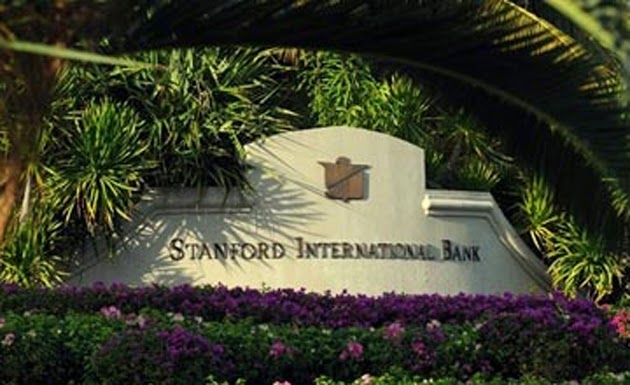
 Stanford Group Co., insured by the federally chartered and industry-funded Securities Investor Protection Corp., received billions of dollars that victims were told would be secure at Stanford International Bank in the Caribbean nation of Antigua.

 Instead, a Houston jury concluded, the majority of the money went to Stanford and several of his associates. 

The SEC, in effect, directed SIPC to cover individual Stanford investor losses up to $500,000.

 SIPC officials refused and won a judgment from a federal district judge in Washington, D.C. The SEC is appealing that decision.

To join the debate click here.

For a full and open debate on the Stanford receivership visit the Stanford International Victims Group - SIVG official Forum http://sivg.org.ag/


Thursday, 27 March 2014

Distribution Schedules

In accordance with the Court’s May 30, 2013 Order Approving Receiver's Interim Distribution Plan, the Receiver has filed the following schedules of distribution payments with the United States District Court for the Northern District of Texas, Dallas Division. This page will be periodically updated with additional schedules that are filed on a rolling basis as responses to Certification Notices are received and processed.


To join the debate click here. 

For a full and open debate on the Stanford Receivership visit the Stanford International Victims Group – SIVG official forum http://sivg.org.ag/


Friday, 7 March 2014

Where is the Stanford Ponzi loot? This is the man who knows


Victims of the massive Allen Stanford Ponzi scheme got a rare bit of good news Thursday. Some $18 million in Stanford funds that had been parked in Canada was returned to the U.S. for distribution to investors.

 But the payment is tiny in comparison to the $5 billion in actual losses from the scam, and the court-appointed receiver who has spent the past five years searching for Stanford's billions tells CNBC it is unlikely investors will ever recover much because for the most part, "the money is gone."

 "I think about the victims every day," Dallas attorney Ralph Janvey told CNBC in an exclusive interview, his first since being appointed five years ago.

 "They believed what they were told. And I will say publicly I don't think the victims should be blamed for anything," Janvey said. "They made an investment based on what they were told. What they were told was wrong and it was fraud."

 A federal judge placed Stanford's global financial empire in receivership—and under Janvey's control—after the Securities and Exchange Commission filed suit in 2009. The suit accused Stanford of running "a fraud of shocking magnitude" based on bogus certificates of deposit.

 Stanford's brokers sold the CDs—issued by his offshore bank in Antigua and Barbuda—to investors around the world. But a federal jury found in 2012 that most of the funds went to support Stanford's lavish lifestyle. Stanford is serving a 110-year prison sentence, and appealing his conviction on 13 criminal counts. 

Comparisons to Madoff Ponzi scheme

 Since taking over as receiver, Janvey has been searching the world for assets as well as enduring frequent comparisons to the much more successful recovery effort in the Bernard Madoff Ponzi scheme.

 "I don't minimize the Madoff fraud and I don't want to minimize the Madoff tragedy," Janvey said. "But Stanford was much more complicated."

 That is reflected in the fact that while Janvey's counterpart in the Madoff case—trustee Irving Picard—has said investors could eventually recoup all of their principal. Janvey says the best case scenario for Stanford investors is "pennies on the dollar."

 So far, Stanford's 28,000 victims—more than 10 times the number of victims in the Madoff case—have received next to nothing. Janvey received court approval last year to begin making his first distribution to clients. The $55 million being paid out amounts to less than one penny on the dollar.

 To date, Janvey says, he has recovered only about $263 million. But nearly half of that—around $120 million—has been eaten up by expenses including $57 million just to wind down Stanford's global operations including 130 companies and 3,000 employees in 30 countries. Janvey says the money, including fees for him and a team of experts, "had to be spent" because of the complexity of the fraud.

 "Stanford was spending $33 million a month on expenses," Janvey said. "We had to shut that down. It's also going to litigation; with the goal being what we spend is to bring money back into receivership to distribute to the victims."

Who Kept Allen Stanford's Money?


Janvey has filed dozens of lawsuits seeking more than $680 million from banks, law firms, politicians and charities that benefited from Stanford's largess. For the most part, they have been unwilling to give any of the money back.
"We had to sue the Democratic and Republican committees to get back over a million dollars.That shouldn't happen," Janvey said.
It took a federal appeals court ruling last year to get the campaign contributions returned, after the committees challenged Janvey's standing to claw back the money.
"Stanford had no right to give the money for political contributions, and they had no right to give it away," Janvey said. "We have other politicians who still have money who haven't given it to us yet."
They include President Barack Obama's 2008 presidential campaign, which received $4,600, according to court filings, and Senate Minority Leader Mitch McConnell, R-Ky., who received $2,500. Janvey said the amounts are too small to justify the cost of litigation.
"Another example is the University of Miami," Janvey said. "They got $6 million to do a study of fish and coral in Antigua. That did not help the victims. That money should come back to the receivership estate so it can be distributed to the victims."
A university spokeswoman declined to comment.
Stanford's Ponzi scheme: Who was Allen Stanford?


anvey is also a party in suits against five banks that did business with Stanford, alleging they knew or should have known about the fraud.
"They were on notice and they did nothing about it. And they enabled that fraud to go on for years and years and years," he said.
The cases are similar to allegations against Madoff's primary banker—JPMorgan Chase—which earlier this year agreed to pay more than $2 billion to head off criminal charges. But Stanford's banks, HSBC, Societe Generale, Toronto Dominion, Trustmark and Bank of Houston, have all moved to dismiss the allegations. Janvey said the Justice Department should be investigating Stanford's banks the way it did with Madoff's.
"I would encourage the government to look at the banks," Janvey said. "We are here to assist them if they want our assistance."
Further frustrating Janvey's efforts is the fact that the Securities Investor Protection Corporation (SIPC) has refused to provide coverage to Stanford victims—another contrast to the Madoff case, where the SIPC has not only paid victims but also covered the trustee's expenses.
Money hidden offshore?
Stanford's deep political connections as well as rumors—mostly cultivated by him—that he worked as a government informant have led to speculation he may have some money hidden offshore. But Janvey says that is not the case.
"And we've looked. It's one of the things we did in the early days of the receivership. It doesn't exist," he said. "We've traced the money. The money is gone. And that's very frustrating for the victims, I understand that. But the money was gone before we came in."
Janvey says the money that was not redeemed by Stanford investors "went to his spending."
"He had to buy the reputation that he—quote—'earned,' and he used victims' money to get there."
Some $208 million is frozen in Swiss banks, with about two-thirds of the money to go into the receivership controlled by Janvey, and the rest to go to court-appointed liquidators in Antigua. But much of that money is contingent on Stanford's criminal appeal. Stanford, who is representing himself, recently filed a motion from prison asking for another six months to file his initial brief.
Janvey estimates it will take another five years of litigation before he has exhausted his recovery efforts.
Since the scandal broke in 2009, 67 Stanford clients have died.
To join the debate click here. 

For a full and open debate on the Stanford Receivership visit the Stanford International Victims Group – SIVG official forum http://sivg.org.ag/


Saturday, 1 March 2014

Grant Thornton Notice to Creditors

NOTICE TO CREDITORS 

25 February 2014

Dear Creditor:

Stanford International Bank Limited - in Liquidation ("the Company") 
Re: Notice of Declaration 

The Joint Liquidators are now in a position to make a first interim distribution in the amount of $0.01 on the dollar. CD holders with claims allowed below EC$20,000 (US$7,407.40) will be paid out in full in accordance with section 289 of the International Business Corporations Act.

If you received a preference payment, for which you will have been notified separately, your distribution will be held back until the Court makes a final determination.

Please see the below summary of the receipts and payments covering the period of the liquidation to 31 December 2013 from which you will see that the total amount to be immediately distributed is US$33,262,396 with a further US$16,989,510 being held back pending resolution by the Court of the preference issue.

The balance in hand of US$15,344,780 is retained for future costs, fees and expenses of the liquidation, including employee and vendor claims. We expect to pay a further dividend in the future. However, the quantum and timing at this stage is unknown due to the uncertainty of future realisations.

Yours sincerely
For and on behalf of Stanford International Bank Limited

Marcus Wide and Hugh Dickson
Joint Liquidators


STANFORD INTERNATIONAL BANK LIMITED (IN LIQUIDATION)
Receipts and payments statement account As of 31 Dec 2013

Receipts (USD) 

  Balance received from former Liquidators                                                     NIL
  UK recoveries                                                                                             95,111,096
  3rd Party Funding (Hamilton)                                                                        5,001,000
  ECAB building sale process                                                                          4,537,037
  HSBC , Panama                                                                                            3,275,228
  Rental receipt (ECAB building)                                                                        255,556
  Settled legal claims                                                                                          249,930
  Settlement on pricing error                                                                              230,710
  Other receipts                                                                                                  167,225
                                                                                                                     ----------------
                                                                                                                     108,827,782

Less: Cost Awarded for removal of former liquidators                                 (3,185,338)
                                                                                                                      ---------------

Total Receipts                                                                                            105,642,444

Payments
  Liquidators fees & expenses                                                                        7,446,658
  Co-lead legal advisors fees and expenses                                                  10,745,246
  Other legal advisors fees and expenses                                                      12,687,197
  Other advisors fees                                                                                       1,722,896
  Other operational expenses                                                                           7,443,761
                                                                                                                     ----------------
Total Payments                                                                                           40,045,758
                                                                                                                     ----------------
                                                                                                                     ----------------
 Balance on Hand                                                                                       65,596,686 
                                                                                                                      ==========

Represented by:
  Preference Payment holdback                                                                    16,989,510
  1st Distribution to Investors                                                                         33,262,396
  Balance carried forward                                                                              15,344,780
                                                                                                                       ----------------
                                                                                                                        65,596,686
                                                                                                                      =========

To join the debate click here. 


For a full and open debate on the Stanford Receivership visit the Stanford International Victims Group – SIVG official forum http://sivg.org.ag/


Monday, 24 February 2014

Joint Comments by the U.S. Receiver, the Examiner and the Official Stanford Investors Committee Concerning the Liquidators' Efforts to Recover Preference Payments

Joint Comments by the U.S. Receiver, the Examiner and the Official Stanford Investors Committee Concerning the Liquidators' Efforts to Recover Preference Payments - The U.S. Receiver, the Examiner, and the Official Stanford Investors Committee understand that certain SIBL CD investors have received letters or emails from Marcus Wide and Hugh Dickson, the Joint Liquidators appointed by the Antiguan courts to oversee the Antiguan liquidation of SIBL, through which the Joint Liquidators seek to recover from the investors certain amounts (referred to as "preference payments") that the investors had withdrawn or otherwise received from SIBL during the 6 months' prior to the failure of SIBL. We also understand that these letters and/or emails are causing considerable distress and concern among SIBL CD investors. We wish to clarify the following matters:

1.The U.S. Receiver, the Examiner, and the Official Stanford Investors Committee have no involvement in the Joint Liquidators' effort to recover these "preference payments." The Joint Liquidators are proceeding pursuant to Antiguan law and with the approval of the Antiguan courts. Similarly, the U.S. District Court overseeing the Stanford Receivership has no role in or jurisdiction over the Joint Liquidators' efforts to recover these "preference payments."

2.The Antiguan Joint Liquidators have posted a set of Frequently Asked Questions concerning their effort to recover "preference payments" on their website. You can review those Frequently Asked Questions at http://www.sibliquidation.com

3.We understand that the Antiguan court has established a process for objecting to the Joint Liquidators' effort to recover these "preference payments." In the first instance, any objections must be directed to the Joint Liquidators at Stanford.enquiries@uk.gt.com. Objections must be filed within 120 days after the investor receives the letter or email asserting the Joint Liquidators' claim for these "preference payments."

4.At present, the Joint Liquidators are not permitted to bring lawsuits in the United States to recover these "preference payments," nor for any other purpose.

To join the debate click here. 

For a full and open debate on the Stanford Receivership visit the Stanford International Victims Group – SIVG official forum http://sivg.org.ag/


Thursday, 20 February 2014

Politicians yet to return big money from Stanford’s Ponzi Scam

Five years after R. Allen Stanford’s investment companies collapsed in an infamous multibillion-dollar Ponzi scheme, records show that the receiver charged with recouping money for victims still is chasing a long list of politicians.

Stanford was a generous and bipartisan donor to political campaigns. After his conviction, Ralph Janvey was appointed by the court as receiver and given the task of tracking down and recovering Stanford’s fraudulent expenditures so the money could be returned to the Ponzi scheme victims.

Some of the big donors have returned money, even if they had to be sued: The Democratic Senatorial Campaign Committee has returned $950,000, and the National Republican Congressional Committee gave back nearly $250,000.

But a number of other campaigns have not. By Mr. Janvey’s calculation, nearly $120,000 in tainted donations should go to creditors.

The Obama campaign has not returned $4,600, and Rep. Pete Sessions, Texas Republican, and the New Jersey Democratic State Committee each owes $10,000, according to the receiver’s most recent list.

A spokeswoman for Mr. Sessions said he has already gotten rid of money from Stanford, who is serving a 110-year prison sentence on fraud charges.

“Congressman Sessions donated to charity the dollar amount of all contributions from individuals charged in the case,” Sessions spokeswoman Torrie Miller wrote in an email.

Federal Election Commission rules allow politicians to disgorge unwanted or illegal donations by donating to charity, but that won’t get Mr. Sessions or any other lawmaker off of Mr. Janvey’s list.

Scott Powers, an attorney for Mr. Janey, said contributions to charity that are equal to the amount of campaign donations from Stanford don’t make any difference.

“The money at issue did not rightfully belong to Mr. Stanford,” he said.

“It was not rightfully transferred to the political committees. And so the political committees are not entitled to decide that the money should be given to charity rather than given to the receiver for distribution to the victims from whom the money was taken in the first place.”

The DSCC and the NRCC, which have returned their money, did so only after losing arguments in court. In perhaps a rare example of Capitol Hill bipartisanship, the fundraising committees said Mr. Janvey’s demand wasn’t timely.

But the 5th U.S. Circuit Court of Appeals ruled in Mr. Janvey’s favor in October 2012.

The problem for Mr. Janvey now is that the donations that still haven’t been collected aren’t worth the expense of filing lawsuits. Most of the outstanding contributions are for a few thousand dollars each.

Other top recipients on the receiver’s list include Sen. John Cornyn, Texas Republican, who received $6,000 from Stanford, and congressional Delegate Donna M. Christensen, a Democrat who represents the Virgin Islands and accepted $5,000 from him.

Also listed are Senate Minority Leader Mitch McConnell, Kentucky Republican, at $2,500, and former Rep. Rahm Emanuel, Illinois Democratic and current Chicago mayor, for $3,000.

Cornyn spokeswoman Megan Mitchell said the senator gave the money he received from Stanford to the Big Brothers Big Sisters of America and sent letters to federal agencies to ensure money caught up in the Stanford scheme was returned to investors.

Ms. Mitchell also said Mr. Cornyn co-sponsored a resolution calling on the Treasury secretary to “use the voice and the vote” of the U.S. to oppose World Bank or International Monetary Assistance to Antigua until its government cooperates with U.S. efforts to compensate Stanford victims.

Stanford’s fraud centered at his offshore bank in Antigua.

Still, Mr. Powers said, charitable contributions don’t do Stanford victims much good.

“For economic reasons, the receiver is not in a position to pursue litigation with every politician who received contributions from Stanford,” Mr. Powers said. “The receiver nevertheless calls on the remaining holdouts to do the right thing and to return the contributions for the benefit of the victims of the Stanford fraud.”

To join the debate click here. 

For a full and open debate on the Stanford Receivership visit the Stanford International Victims Group – SIVG official forum http://sivg.org.ag/


Friday, 14 February 2014

Open Letter From Stanford Receiver Dated February 14, 2014

Stanford Financial Group Receivership 
 1029 State Highway 6 North I Suite 650-272 1 Houston, TX 77079 
 Phone 866.964.6301 


 February 14, 2014

 To All Those Affected by the Stanford Fraud:

 It has been five years since the Court appointed me as Receiver to unwind the world-wide Ponzi scheme perpetrated by Allen Stanford and those who aided, abetted and enabled him. I know that these continue to be very difficult times for the thousands of you whose lives were impacted, and in many cases devastated, by the Stanford fraud. Even though my team and I have worked hard and made much progress over the last 5 years, the process of unwinding the fraud and the pace of recovering money have been frustratingly slow. Unfortunately, the costs associated with this process have been substantial. Although many challenges still lie ahead, the entire Receivership team and I are committed to working as hard as we can to recover as much money as we can for the eligible claimants.

To read the full transcript click here.


For a full and open debate on the Stanford Receivership visit the Stanford International Victims Group – SIVG official forum http://sivg.org.ag/


Tuesday, 11 February 2014

Preference Payments Frequently Asked Questions

Below is a list of frequently asked questions regarding Grant Thornton's approach to preference payments.


1. What is a Preference payment?
2. How is this relevant in the Stanford International Bank matter?
3. Why have I received a Preference letter?
4. What shall I do if I have received a Preference letter?
5. Why has my claim increased?
6. What happens once I repay the Preference payment to the Estate?
7. What happens if I do not repay the Preference payment to the Estate?
8. What do I do if I disagree with this approach?


To find the answer to these questions and more click here:


For a full and open debate on the Stanford Receivership visit the Stanford International Victims Group – SIVG official forum http://sivg.org.ag/


Thursday, 5 December 2013

Stanford Financial Claims 7th Distribution December 4th 2013

Receiver files 7th Schedule of Payments to be Made Pursuant to the Interim Distribution Plan - On December 4, 2013, the Receiver filed his 7th Schedule of distribution payments with the United States District Court for the Northern District of Texas, Dallas Division. The 7th Schedule will be followed by others, each of which will be submitted by the Receiver on a rolling basis as additional responses to Certification Notices are received and processed.

 To view a copy of the 7th Schedule, please click here: http://sivg.org.ag/topic240.html

For a full and open debate on the Stanford Receivership visit the Stanford International Victims Group - SIVG official forum http://sivg.org.ag/


Wednesday, 27 November 2013

CRT Offer to Buy Stanford International Bank Investor Claims


(Caracas, November 26 - Noticias24) -. CRT Special Investments announced Tuesday through a press release that it would buy claims from Stanford International Bank (SIB) to investors, who can "receive their money within weeks instead of having to wait years and face the uncertainty of recovery, "said Joe Sarachek, General Director of the CRT.

 Following is the full text of the statement: http://sivg.org.ag/topic237.html

For a full and open debate on the Stanford Receivership visit the Stanford International Victims Group - SIVG official forum http://sivg.org.ag/


Tuesday, 5 November 2013

Stanford Financial Claims 6th Distribution November 4th 2013

Receiver files 6th Schedule of Payments to be Made Pursuant to the Interim Distribution Plan - On November 4, 2013, the Receiver filed his 6th Schedule of distribution payments with the United States District Court for the Northern District of Texas, Dallas Division. The 6th Schedule will be followed by others, each of which will be submitted by the Receiver on a rolling basis as additional responses to Certification Notices are received and processed.

 To view a copy of the 6th Schedule, please click here: 

 http://sivg.org.ag/topic230.html 
 
 For a full and open debate on the Stanford Receivership visit the Stanford International Victims Group - SIVG official forum http://sivg.org.ag/


Monday, 28 October 2013

Stanford Financial Group Receivership Update

The four schedules filed by the Receiver address total distributions of approximately $12.59 million of the $55 million that has been authorized for distribution by the Court. For Stanford Investors who have not yet received an initial distribution, there are a number of reasons why that may have occurred, including the following:

 •Investor may not have filed a claim with the Receiver’s claim process before the Bar Date fixed by the Court.
•The Investor may not have responded to a request for additional information from the Receiver’s claim processing agent, Gilardi & Co.
 •The Investor may have objected to the Receiver’s Notice of Determination with respect to the Investor’s claim.
•The Investor may not have completed and returned the Receiver’s Certification Form.*
•The Investor’s distribution check may simply be in process, such that it will be listed on subsequent schedules to be filed by the Receiver.

 The Receiver is continuing to process Notices of Determination, objections to Notices of Determination, and Claim Certifications. Additional payment schedules will be prepared and filed on a rolling basis. It is the Receiver’s expectation that additional payment schedules will be prepared and filed every few weeks (provided that there are sufficient claims being processed to justify that pace).

 *The Receiver advises that a significant number of Investors who filed claims and received Notices of Determination have not yet returned completed Certification Forms. Completed Certification Forms must be received before distribution checks are issued.

 Read More: http://sivg.org.ag/topic227.html 

 For a full and open debate on the Stanford Receivership visit the Stanford International Victims Group - SIVG official forum http://sivg.org.ag/

Saturday, 26 October 2013

Stanford Financial Claims 5th Distribution October 25th 2013

Receiver files 5th Schedule of Payments to be Made Pursuant to the Interim Distribution Plan - On October 25, 2013, the Receiver filed his 5th Schedule of distribution payments with the United States District Court for the Northern District of Texas, Dallas Division. The 5th Schedule will be followed by others, each of which will be submitted by the Receiver on a rolling basis as additional responses to Certification Notices are received and processed.

To view a copy of the 5th Schedule, please click here:

http://sivg.org.ag/topic225.html


For a full and open debate on the Stanford Receivership visit the Stanford International Victims Group - SIVG official forum http://sivg.org.ag/


Saturday, 19 October 2013

Receiver files 4th Schedule of Payments to be Made Pursuant to the Interim Distribution Plan

On October 17th, 2013, the Receiver filed his 4th Schedule of distribution payments with the United States District Court for the Northern District of Texas, Dallas Division. The 4th Schedule will be followed by others, each of which will be submitted by the Receiver on a rolling basis as additional responses to Certification Notices are received and processed.

To view a copy of the 4th Schedule, please click here:

http://sivg.org.ag/topic217.html


For a full and open debate on the Stanford Receivership visit the Stanford International Victims Group - SIVG official forum http://sivg.org.ag/


Friday, 11 October 2013

Reports of Gilardi withholding Distribution Cheques

We are receiving reports of Gilardi withholding distribution checks to certain claimants.


If you are affected then Read More: http://sivg.org.ag/topic210.html 

 For a full and open debate on the Stanford Receivership visit the Stanford International Victims Group – SIVG official forum http://sivg.org.ag/

Thursday, 10 October 2013

Victims of Stanford Ponzi scheme fear they’ve been burned again


Ralph Janvey, the receiver in the Stanford case, has mailed checks from $2.81 to $110,000 to investors -- less than a penny of return on the dollar.

 By LAUREN KYGER 
 Center for Public Integrity 
 Published: 10 October 2013 05:01 AM 
 Updated: 10 October 2013 07:14 AM 

 When 18,000 people got fleeced in R. Allen Stanford’s $7.2 billion Ponzi scheme, the court appointed a receiver in 2009 to recover as much money as possible from Stanford’s failed companies to return to investors.

 After 41/2 years, the receiver, Ralph Janvey, began mailing checks ranging from $2.81 to $110,000 to hundreds of investors. That amounts to about $55 million of the $6 billion lost in the scheme, less than a penny on the dollar.

 Unlike the investors, Janvey, who has billed from $340 to $400 an hour for his services, is making out quite well. To date, Janvey and his team have recovered $234.9 million from the bankrupt Stanford Financial Group and spent more than half the total — about $124 million — on personnel and other expenses.

 “From the victims’ point of view, there is no way, shape or form that the receivership could be viewed as successful, this has been one of the biggest failures of a liquidation in history".

” The largest chunk of the Janvey team’s expenses — $67.1 million — was spent on “receivership’s professional fees and expenses,” according to court documents. Those fees and expenses add up to more than 28.5 percent of the money recovered from Stanford’s assets so far.

 Janvey has “complete and exclusive control, possession, and custody” of the assets left behind by Stanford’s business, according to the court order that named him receiver on Feb. 17, 2009.

 Janvey’s attorney, Kevin Sadler of Houston law firm Baker Botts, said the high costs are an unfortunate downside of unwinding R. Allen Stanford’s 18-year financial house of cards, which had offices in 23 states and 13 countries and more than 3,000 employees.

Worldwide tug of war 

 Sadler said Janvey has been fighting a “worldwide tug of war over what was left of Stanford’s assets,” involving multiple national governments and liquidators in Antigua, where Stanford International Bank was located. In March, Janvey reached a settlement to recover about $300 million of Stanford’s assets that have been frozen in Switzerland, Canada and the United Kingdom.

 Sadler said such lawsuits are now the best hope for getting more money back for Stanford’s victims.

 Janvey has been enmeshed in controversy regarding the Stanford liquidation. The Securities and Exchange Commission, which nominated Janvey and rarely has public disputes with receivers, won a motion to rein in some of his spending in June 2009 after the first fee applications were submitted.

 The expenses included a $160,000 payment to a public relations firm called Pierpont Communications for three months of reviewing, sorting and forwarding emails in 2009. In a written objection to the fee application, court-appointed examiner John Little said he had “significant doubt that Pierpont has created any benefit for the receivership estate.”

 $9,439 a day 

 FTI Consulting, a forensic accounting firm, billed more than $528,000 in airfare, parking, hotels, taxis and subway costs to the estate for its first 56 days on the job. Little objected, pointing out that this amounted to “$9,439 in travel-related expenses per day, every day, during the first 56 days.”

 A large part of the receivership’s early spending — $48 million — went to winding down the more than 100 companies in the Stanford Group, costs that were unavoidable, Sadler says.

 Today, Little says, Janvey’s spending has slowed. In the 12 months ending June 30, he’s spent $9.1 million, compared with $20 million spent in the first two months of the receivership in 2009.

 U.S. District Judge David C. Godbey denied a 2011 request by unhappy investors to intervene in the case because they believed Janvey was spending too much. Godbey noted that “the rate of expenditures on professional fees has decreased markedly over time, with the bulk of such expenses incurred relatively early in the receivership.”

 When large Ponzi schemes or companies go bankrupt, court-appointed receivers often find themselves employed for long stretches with a guaranteed income. There are no clear rules or guidelines dictating how a receiver should go about unwinding a failed or fraudulent business or recovering its assets, Sadler said.

 That allows receivers like Janvey to work full time for years on an estate, billing either investors or the congressionally chartered Securities Investor Protection Corp., or SIPC.

 R. Allen Stanford’s $7 billion scam was just one of many Ponzi schemes to fall apart within the past five years. Most notably, Bernard Madoff was sentenced to 150 years in prison for operating a $50 billion Ponzi scheme that cost investors more than $17 billion.

 Irving Picard, the Madoff receiver who was appointed in December 2008, says he has spent about $850 million trying to recover money for investors. The number is huge, but it’s less than 10 percent of the $9.5 billion he has returned to Madoff’s victims. He’s distributed $4.9 billion.

 He declined to say whether he believes Janvey’s costs are too high.

 “I don’t know enough about the specifics about what he had to do,” Picard said.

 Sadler said Madoff’s scheme was a “compact operation to wind down” compared with Stanford’s, which involved more than 100 interconnected companies.

 Like Picard, he said, Janvey watches his costs.

 “We’ve been pretty sensitive to the fact that we can’t spend $10 to recover $10 — or even $5,” he said. 

Janvey has sued about 1,800 former Stanford employees and customers who he says got money from the company, either in salary, bonuses or investment returns, that rightfully belongs to the defrauded investors. 

“Everyone we have sued, we have sued because in both fact and law we believe they received money they were not entitled to,” Sadler said.

 He said the total amount that Janvey could recover from these lawsuits is $1 billion, the only remaining source of money for the defrauded investors. Most of the former employees and clients are fighting the suits because they believe they only got money they were entitled to.

Political parties sued

 Janvey has sued thousands of people, but he has forgone many lawsuits because the return wasn’t worth it. For example, Janvey sued the Democratic and Republican national party committees to recover Stanford’s contributions. He also sent letters to the more than 50 senators and House members who received Stanford contributions but did not go to court.

 Fewer than 20 returned the money, he said.

 Janvey has been widely criticized for spending too much, but Sadler insists it’s the only way to resolve a major fraud.

 “When these things collapse, they just cost a lot of money to clean up,” he said.

 The Center for Public Integrity is a nonprofit, independent investigative news outlet. For more of its stories on this topic, go to publicintegrity.org.

 $7.2 billion - Amount bilked from investors by R. Allen Stanford’s Ponzi scheme
 $234.9 million - Amount recovered from the bankrupt Stanford Financial Group
 $124 million - Amount spent by the receiver on personnel and other expenses
 $55 million - Amount returned to investors so far


 For a full and open debate on the Stanford Receivership visit the Stanford International Victims Group - SIVG official forum http://sivg.org.ag/

Saturday, 5 October 2013

Receiver files 3rd Schedule of Payments to be Made Pursuant to the Interim Distribution Plan

On October 4, 2013, the Receiver filed his 3rd Schedule of distribution payments with the United States District Court for the Northern District of Texas, Dallas Division. The 3rd Schedule will be followed by others, each of which will be submitted by the Receiver on a rolling basis as additional responses to Certification Notices are received and processed.

 To view a copy of the 3rd Schedule, please click here:

http://sivg.org.ag/topic200.html


For a full and open debate on the Stanford Receivership visit the Stanford International Victims Group - SIVG official forum http://sivg.org.ag/

Thursday, 3 October 2013

For those who missed the original Claims Deadline

I have had several victims - who for whatever reason missed the registration deadline last September and have asked me what they need to do to get their claim registered now. I have been speaking to Baker Botts and this is the reply he has sent to me:

 "Generally, if a claimant failed to file a claim with the US receivership prior to the September 1, 2012 bar date, such claims are forever barred as against the US receivership estate, per order of the Court. If there are extenuating circumstances that constitute good cause, the Receivership will consider the circumstances and make a determination whether to recommend acceptance of the late claims by the Court. Given the notice provided, however, we expect that good cause will be a difficult threshold to meet. If claimants wish to submit requests to accept late claims to the receivership, they can use the contact information below.

 Nonetheless, claimants who filed claims with the Joint Liquidators prior to September 1, 2012 but did not file with the U.S. receivership by that date may be allowed to participate in future receivership distributions if the Receiver determines the claimant has a valid claim and the claimant agrees to jurisdiction of the US Court. We will communicate directly with claimants who filed with the Joint Liquidators before the US receivership bar date with the appropriate form(s) to execute for the purpose of ensuring that such claimants agree to the jurisdiction of the U.S. District Court in Texas. Only after we have done so and received the appropriate forms back from the claimants will notices of determination issue to those claimants. Even if such claimants are allowed to participate in future distributions from the receivership, they will not be eligible to participate in the current distribution that has already been approved by the Court. 


Regards," 


 It would appear that if you missed filing your claim with Janvey (Gilardi), you are now bared from registering - except for special circumstances as above. I do feel sorry for all those who have missed out and I am sorry to have to be the bearer of such bad news. Let's hope you have all registered with Grant Thornton. Sadly I cannot help those of you who missed last Septembers deadline with Janvey.

 Read More: http://sivg.org.ag/topic199.html 

 For a full and open debate on the Stanford Receivership visit the Stanford International Victims Group - SIVG official forum http://sivg.org.ag/